博客

  • Back to School E-Bike Guide: How to Choose the Right E-Bike for College

    Back to School E-Bike Guide: How to Choose the Right E-Bike for College

    Heading off to college brings a sudden reality check: campus is huge, parking passes are outrageously expensive, and running across quad grounds between back-to-back lectures is exhausting. Walking takes too long, and traditional bikes leave you arriving at class drenched in sweat.

    That’s why electric bikes have quickly become the ultimate campus transportation hack. But buying an e-bike for college isn’t just about picking the coolest-looking frame. You have to consider battery life, indoor storage policies, hill-climbing power, and how well those tires hold up on rainy asphalt or off-road shortcut trails.

    Whether you’re dodging traffic on city streets or hauling heavy textbooks across a hilly campus, here is a practical, realistic breakdown to help you pick the right e-bike for your college journey.

    Narrow-Tire Commuters: Fast, Agile, and Built for Daily Campus Cruising

    If your daily routine consists of paved paths, quick runs to the library, and weaving through crowded walkways, traditional narrow-tire commuters are your best bet. They ride much like standard bicycles—lightweight in feel, easy to maneuver, and efficient on flat asphalt.

    High Carbon Steel Durability for Everyday Abuse

    College bike racks are rough. Bikes get knocked over, bumped by locked scooters, and exposed to unpredictable weather. Models built with high carbon steel frames offer the structural integrity needed to survive four years of tough campus life.

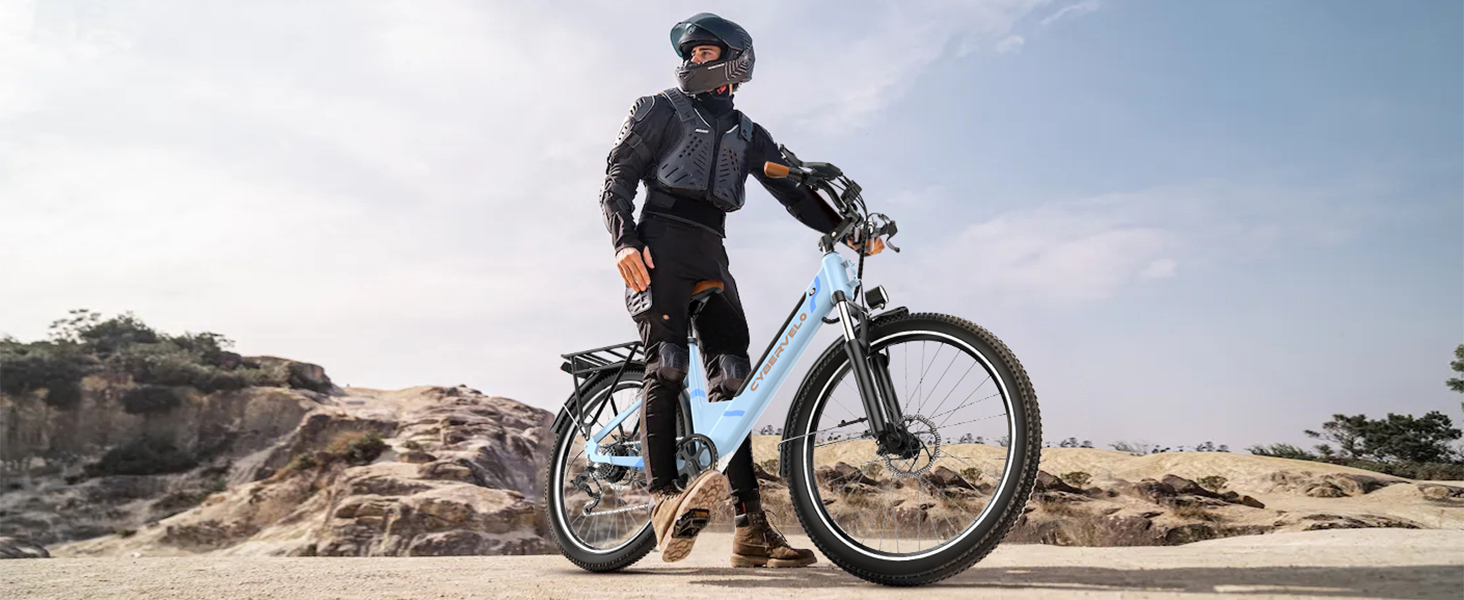
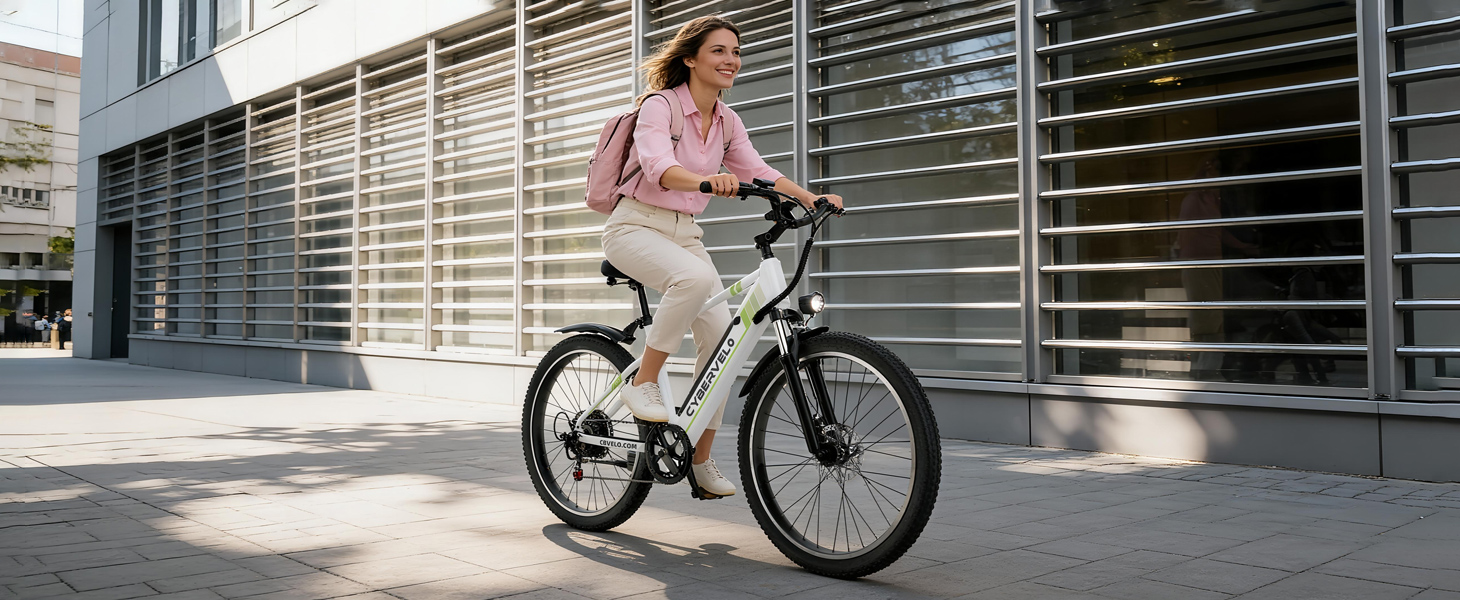
    For students who want an effortless step-through frame that makes mounting easy—even with a heavy backpack—the Cybervelo EK2 Step-Through E-Bike offers an ideal blend of comfort and utility. Packed with a 1000W motor and a clean LCD display, it delivers a comfortable top speed of 28 MPH and up to 80 miles of range per charge, meaning you can easily go a week or more without hunting for a wall outlet.

    If you prefer a classic, sporty step-over frame design with identical reliability, the Cybervelo EK3 26″ Step-Over E-Bike provides that traditional diamond frame feel, powered by the same punchy 1000W system to flatten steep campus hills effortlessly.

    High-Speed Commuting for Off-Campus Residents

    Living two or three miles off-campus changes your priority. You aren’t just cruising past the dining hall—you’re merging into traffic and fighting morning rush-hour cars.

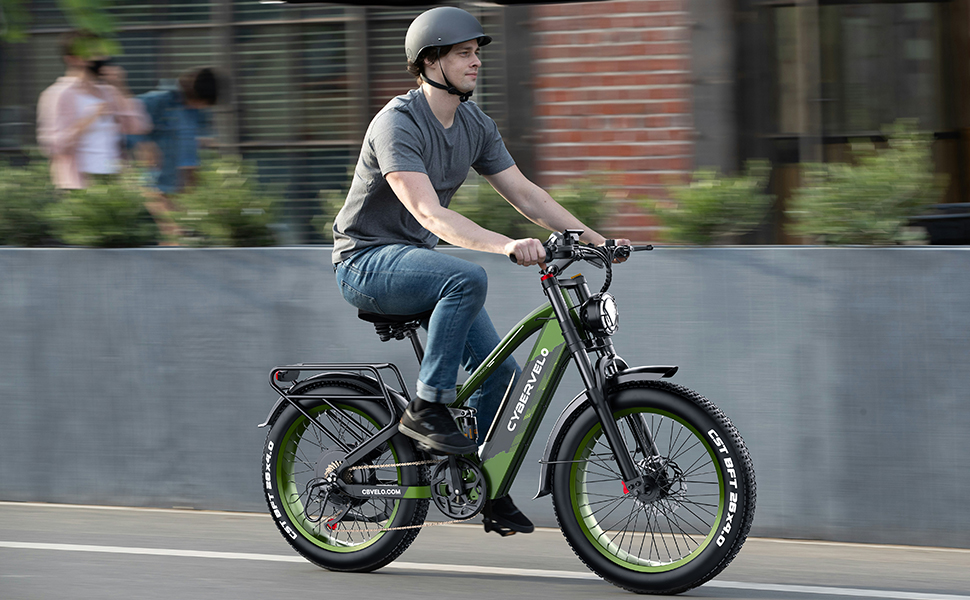
    For longer commutes where keeping up with road traffic matters, speed and battery capacity become paramount. The Cybervelo EK7 Step-Through E-Bike steps up the game with a massive 48V 25AH battery setup and a impressive top speed reaching up to 40 MPH. Features like its vibrant color-coded dashboard let you monitor your speed and remaining range at a quick glance during fast commutes.

    Folding Fat-Tire E-Bikes: Maximum Traction & Space-Saving Storage

    Not every campus has open space, and not every dormitory has outdoor parking space you can trust overnight. Rain, snow, and bike theft make indoor storage a major deciding factor for college buyers.

    The Off-Road Compact Solution

    If you regularly take dirt shortcuts across green spaces, ride over gravel, or need a compact setup that easily tucks into a tight apartment corner or car trunk, a folding fat-tire bike is a game-changer.

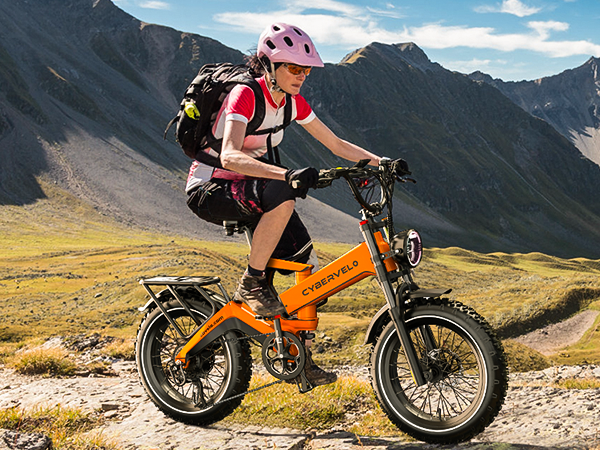
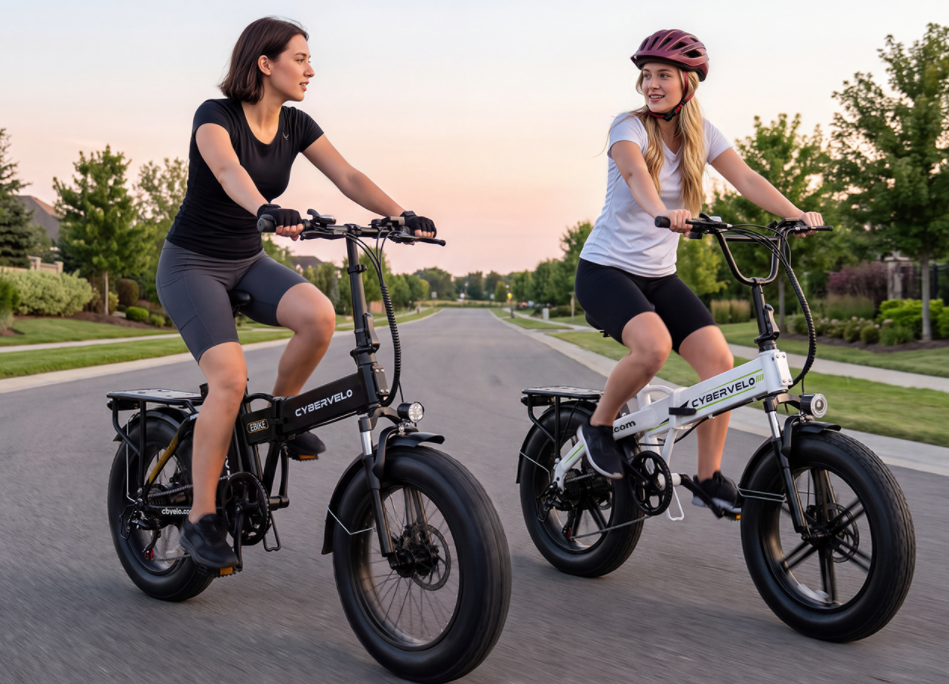
    The Cybervelo EK4 Folding Fat Tire E-Bike features 20×3.0 tires paired with a lightweight foldable high carbon steel frame. Its 1000W peak motor and responsive disc brake setup give you absolute stability on loose dirt or rain-slicked pavement, while still allowing you to fold the bike up in seconds for indoor security.

    Long-Range Utility and All-Terrain Performance

    For students who refuse to compromise on range, safety, or riding comfort, ultra-capacity folding e-bikes represent the top tier of campus mobility.

    The flagship Cybervelo EK6 Folding Electric Bike is built with a lightweight magnesium alloy frame and an expansive 48V 40AH battery pack that delivers up to 120 miles on a single charge. Fitted with wide 20×4.0 puncture-resistant fat tires with reflective safety strips, premium hydraulic disc brakes, a full dual suspension system, and a precision Shimano M315 8-speed shifter, it handles high-speed 40 MPH runs with unmatched smooth comfort and stopping power.

    Buyer’s Guide: 4 Things College Students Must Consider

    1. Dorm and Apartment Storage Policies: Check your campus guidelines. If locking your bike outside overnight worries you, opt for a foldable model like the EK4 or EK6 that fits neatly under a lofted bed or in a closet.
    2. Charging Logistics: Pay close attention to battery capacity (AH). A larger battery means charging only once every week or two, saving you from constantly dragging power cords across your room.
    3. Braking Power: Higher top speeds demand better brakes. If you plan to ride fast or navigate steep hills in wet weather, hydraulic disc brakes offer superior stopping power over standard mechanical discs.
    4. Local Campus Speed Rules: High-powered 1000W+ motors give you plenty of punch on main roads, but always dial down your assist level when navigating crowded pedestrian quads.

    Final Decision: Finding Your Ideal Campus Ride

    Selecting the best campus e-bike comes down to your personal living situation, commute distance, and local terrain.

    • If you want a classic, efficient daily commuter for smooth paved roads, go with the sleek narrow-tire setup of the EK2 or EK3.
    • If you live further off-campus and need extra speed and extended battery life, the EK7 provides maximum commuter performance.
    • If indoor storage, security, and rainy-day traction are your top concerns, the foldable, high-capacity designs of the EK4 or the feature-packed EK6 offer the ultimate flexibility.

    Ready to upgrade your daily campus travel? Explore the full lineup and find your ideal ride at the Cybervelo Electric Bike Collection.
  • Foldable Electric Cargo Tricycle Advantages

    Foldable Electric Cargo Tricycle Advantages

    Navigating narrow urban streets, farm tracks, or busy community hubs with heavy loads used to mean relying on costly fuel vehicles or struggling with unstable two-wheelers. For small business owners, delivery drivers, and everyday commuters who need serious hauling power, finding a balanced vehicle that combines heavy capacity with flexible storage has always been a major headache. Fuel prices keep climbing, and standard e-bikes simply fall short on payload stability.

    That is precisely where modern electric cargo tricycles come in. Combining the ground-hugging balance of three wheels with robust utility motors, these utility vehicles bridge the gap between heavy transport and easy maneuverability.

    Understanding the Utility and Mechanics of Modern E-Trikes

    Unlike traditional two-wheeled e-bikes that require constant balancing when loaded, three-wheeled cargo trikes distribute weight evenly across a wider wheelbase. This structural design fundamentally changes how you haul tools, groceries, or commercial packages.

    • Heavy-Duty Steel Stability: High carbon steel frames provide the structural rigidity required to support dense weight without flexing under stress.
    • Dual-Basket Cargo Capacity: Front and rear cargo integration creates balanced distribution, preventing front-end lift during steep climbs.
    • All-Terrain Footprint: A wider rear tire setup ensures maximum surface traction, stopping skid risks on loose gravel or wet pavement.

    The Practical Edge: Cybervelo C16 In Action

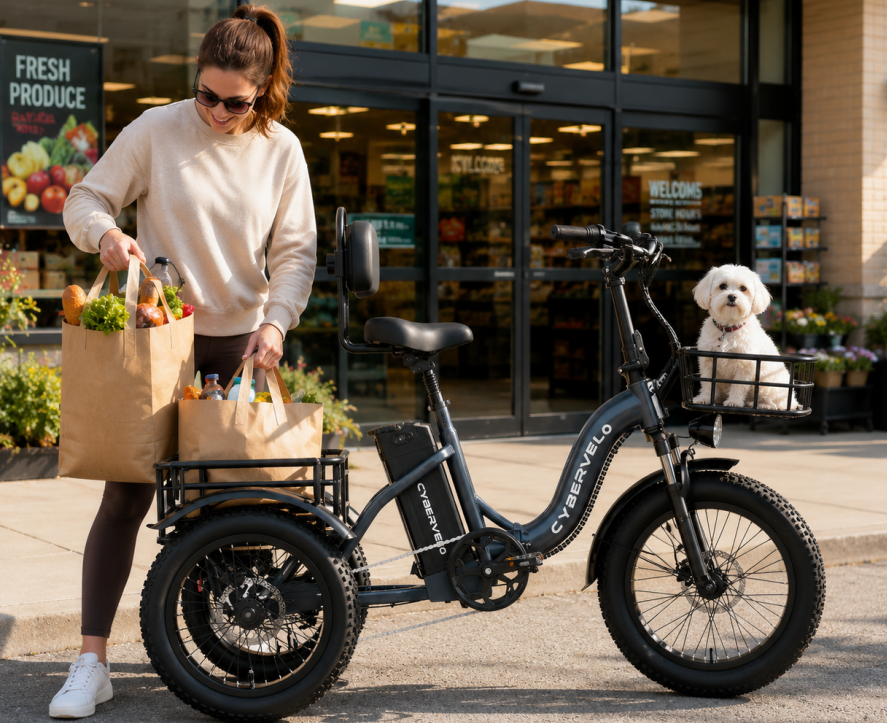
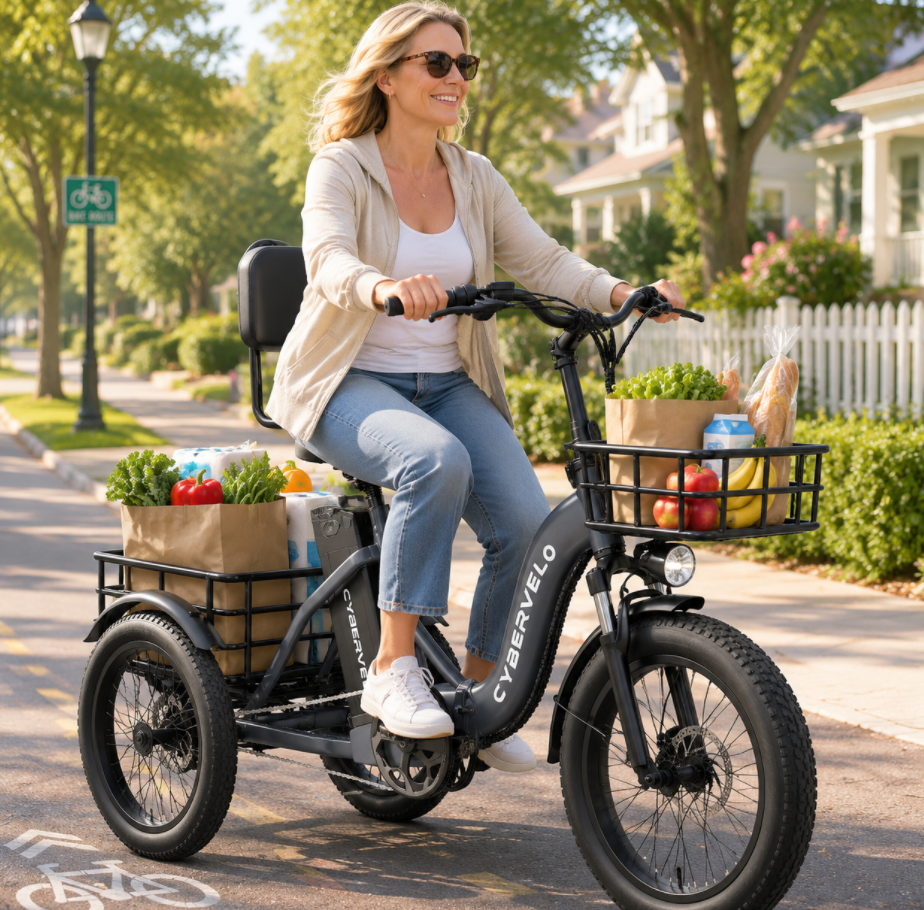
    When choosing a utility tricycle, raw specs matter only as much as how they solve daily logistical problems. Taking a closer look at the Cybervelo C16 Electric Tricycle, its design directly targets the biggest drawbacks of traditional cargo trikes: mobility and storage space.

    Spec / FeatureCybervelo C16 ParameterReal-World User Benefit
    Motor Output1000W Rear MotorHandles 20 MPH top speeds and easily pulls heavy loads uphill.
    Battery Capacity48V 20.8AH RemovableDelivers up to 50 miles per charge, cutting down on daytime recharges
    Frame MaterialHigh Carbon Steel (Foldable)Heavy-duty durability combined with space-saving trunk storage.
    Tires (Front/Rear)20 x 3.0 Front / 16 x 4.0 RearFat tire stability absorbs road vibration and manages uneven terrain.
    Cargo SetupFront & Large Rear BasketsMaximizes storage space for groceries, deliveries, or farm supplies.

    Traditional heavy-duty tricycles usually require a dedicated garage space or trailer. The C16 counters this limitation through a foldable frame mechanism without sacrificing structural integrity. By combining a 20 x 3.0 front tire for smooth steering with extra-wide 16 x 4.0 rear fat tires, the ride stays low to the ground and locked into the asphalt.

    If you are exploring different frame styles or looking to compare utility designs, browsing the broader Cybervelo Electric Bike Collection offers a complete view of how utility transport is changing for modern riders.

    Key Procurement Considerations for Utility E-Trikes

    Before investing in a cargo e-trike, evaluate these essential operational factors to ensure you pick the right match for your daily route:

    • Daily Payload Demands: Check the frame material. High carbon steel is essential if you carry heavy tools or commercial goods daily.
    • Storage and Transit Limits: Measure your garage or car trunk. If space is tight, prioritizing a folding mechanism saves significant space.
    • Battery Range Margin: Always pick a battery capacity that exceeds your average daily mileage by at least 20% to account for heavy cargo battery drain.

    Frequently Asked Questions

    How difficult is it to park or store a three-wheeled cargo bike?

    Standard e-trikes can be bulky, but models designed with a folding frame hinge can be folded in seconds to fit into SUV trunks, bed pickup trucks, or tight garage corners.

    Are electric cargo trikes safe on steep incline hills when fully loaded?

    Yes, provided the motor power is matched with wide tires. A 1000W motor paired with a 48V system provides enough low-end torque to pull full cargo baskets up hills without overheating or stalling.

    Selecting the right utility vehicle comes down to matching load demands with convenience. If you need maximum stability, zero balancing hassle, and serious hauling power, upgrading to a folding electric cargo tricycle is one of the smartest moves for your business or daily routines.

    Conclusion: Elevate Your Heavy-Duty Hauling

    As local logistics and daily cargo needs continue to grow, electric cargo tricycles have proven to be the ultimate solution, bridging the gap between bulky fuel vehicles and unstable two-wheelers. By pairing rock-solid three-wheel stability with robust motor power and smart space design, these utility vehicles take the stress out of heavy transport.

    Whether you are managing last-mile deliveries, hauling tools across work sites, or handling large grocery runs, models like the Cybervelo C16 show how far the industry has come. Its combination of a 1000W motor, high-capacity battery, and foldable high-carbon steel frame delivers serious payload capability without compromising on easy storage.

    Investing in the right cargo e-trike is more than just a gear upgrade—it is a long-term move toward faster, lower-cost, and far more reliable daily transport. Explore the full Cybervelo lineup today to find the perfect utility partner and make every heavy load effortless.

  • The Beginner’s Guide to Off-Road E-Bikes: Traction, Portability, and Choice

    The Beginner’s Guide to Off-Road E-Bikes: Traction, Portability, and Choice

    Stepping into off-road cycling is absolute thrill, but picking your very first electric bike can feel overwhelmingly tricky. Between motor specs, frame builds, and confusing tire measurements, most beginners struggle to figure out what actually matters on real trails.

    If you match the wrong bike to your local terrain, you end up with either a bumpy, unstable ride or a heavy monster that is impossible to store. The goal here isn’t buying the most expensive setup. It is finding a balanced electric bike that gives you confidence, safety, and real value from day one.

    Understanding Off-Road Needs: Specs That Actually Matter

    When you start riding off-pavement, tire dimensions play a massive role in how the bike handles loose dirt, gravel, and rough mud.

    • Tire Width & Traction: Narrow tires sink quickly into sand or loose rocks. Wider tires—often called fat tires—give you a bigger contact patch with the ground, improving stability and control.
    • Frame Flexibility: Foldable frames offer huge convenience if you need to throw your bike into a car trunk, while full-sized rigid frames deliver ultimate stability on bumpier paths.

    Matching Cybervelo Models to Your Riding Style

    To make your decision easier, let’s look at three practical entry-level options from Cybervelo tailored to different beginner setups.

    Compact Versatility for Light Trails

    If you have limited storage space or want to transport your bike without a heavy hitch rack, a compact folding option makes complete sense. The Cybervelo EK4 folding fat tire electric bike features 20×3.0 tires. This setup strikes a solid balance between agile urban commuting and light off-road dirt tracks, giving beginners an easy handling feel without feeling overly bulky.

    Maximum Grip in a Foldable Package

    For riders who want to tackle softer terrain like beach sand or loose gravel while keeping portablity, extra tire volume is key. Stepping up to the Cybervelo EK6 folding electric bike gives you wider 20×4.0 tires. That extra inch of width delivers significantly better shock absorption and traction over rough ground, making forgiving mistakes much easier for new trail riders.

    Full-Sized Trail Stability

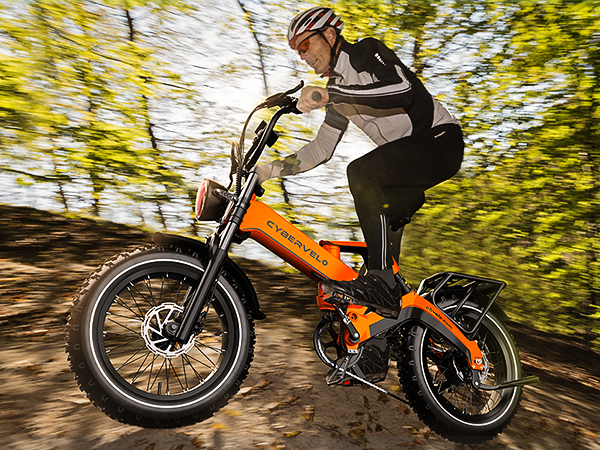
    If trail performance matters more to you than folding convenience, full-sized wheels are the way to go. The full-scale Cybervelo EK9 packs massive 26×4.0 tires. This classic setup rolls over roots, rocks, and uneven ruts far more smoothly than smaller wheels, offering maximum balance and comfort on demanding off-road trips.

    Quick Comparison Matrix

    ModelTire DimensionsFrame StyleBest Terrain MatchKey Advantage
    Cybervelo EK420″ x 3.0″FoldingPaved roads, packed dirt, gravelLightest steering, most compact feel
    Cybervelo EK620″ x 4.0″FoldingSand, loose dirt, muddy pathsLow center of gravity, max traction
    Cybervelo EK926″ x 4.0″Non-foldableDeep trails, rocky paths, rough terrainSuperior rollover, classic MTB comfort

    Quick Buying Advice for Beginners

    • Choose 20×3.0 if you split your time equally between city streets and smooth dirt paths.
    • Choose 20×4.0 if you encounter soft sand, snow, or muddy tracks but still need to fold the bike into a apartment or trunk.
    • Choose 26×4.0 if you prioritize trail comfort, roll-over ability, and long outdoor adventures over portability.

    Finding the right off-road e-bike comes down to honest evaluation of where you live and how you plan to travel. Start with a setup that builds your riding confidence, fits your storage reality, and opens up the outdoors safely.

  • How to Choose the Right E-bike Motor Power for Beginners

    How to Choose the Right E-bike Motor Power for Beginners

    Finding the right e-bike can feel overwhelming when you are staring at endless spec sheets. Motor power, usually measured in watts, is often the first number buyers jump to. But bigger isn’t always better for everyone. If you buy underpowered, your hill climbs will feel painful. If you overbuy, you might end up with unnecessary weight, legal issues, or a bike that feels too twitchy for regular streets.

    The real trick is matching motor wattage to your everyday commute, local terrain, and storage needs. Let’s break down how e-bike motor power translates to real-world riding so you can pick the sweet spot for your daily trips.

    Understanding E-Bike Watts: Beyond the Numbers

    When manufacturers list motor specs, they usually state continuous power output. In simple terms, wattage tells you how much help the motor provides when pushing against friction, wind, and steep inclines.

    • 500W–700W Range: Great for flat city streets and moderate fitness support.
    • 1000W–1500W Range: Ideal for steep hills, carrying heavier cargo, or faster acceleration in urban traffic.
    • 5000W+ Range: High-performance territory built for off-road trails, extreme gradients, and high speeds where traditional bicycles can’t reach.

    Choosing the right wattage boils down to three main questions:

    1. Do you need to store or carry the bike in tight spaces?
    2. Are your daily routes flat or filled with steep climbs?
    3. How fast do you reasonably need to travel on your local commuter paths?

    Matching Wattage to Real Commuting Scenarios

    Scenario 1: The Balanced City Commuter (1000W)

    If you need a reliable daily runner that easily fits under an office desk or into a apartment elevator, a 1000W motor hits an ideal balance. It offers plenty of torque to push through head winds and urban slopes without making the frame too heavy to fold up.

    For commuters who prioritize portability alongside strong hill-climbing power, a versatile option like the MARS700 folding e-bike with a 1000W motor delivers solid power without sacrificing space efficiency. It folds down quickly for easy trunk storage while maintaining standard street practicality.

    Scenario 2: The Heavy Duty or Hilly Route (1500W)

    When your daily commute involves continuous hill climbs, heavier cargo, or longer distances on mixed surfaces, 1000W might occasionally strain. Moving up to 1500W gives you extra low-end torque so your speed doesn’t drop significantly on steeper inclines.

    If you like the convenience of a compact frame but want extra grunt for steep neighborhoods, consider the EK6 Max 1500W folding electric bike. The added wattage makes launching from a full stop quick and confident, even when carrying heavy backpacks or grocery bags.

    Scenario 3: Maximum Performance & Extended Range (5000W)

    For riders looking far beyond typical municipal bike lanes, extreme motor power enters the conversation. A 5000W setup isn’t built for a casual ride down a crowded pedestrian pathway; it’s designed for riders treating their e-bike like a lightweight electric crossover vehicle for private tracks or rugged open terrain.

    A full-frame model such as the high-powered Cybervelo EK9 5000W electric bike caters to enthusiasts seeking top-tier speed, aggressive acceleration, and heavy-duty frame stability where folding mechanisms are unnecessary.

    Key Things to Watch Before Buying

    • Weight vs. Power: Higher wattage requires larger batteries and beefier motor casings. If you frequently carry your bike up three flights of stairs, factor total bike weight into your decision.
    • Folding vs. Rigid Frames: Folding models give you maximum flexibility for train transfers and apartment storage. Non-folding frames give you maximum frame rigidity for ultra-high-power motors.
    • Local Traffic Regulations: Check your municipal rules on e-bike classification. Many public roads have power limits for different categories of e-bikes.

    Practical Verdict: Which One Should You Get?

    Selecting your power output isn’t about bragging rights—it’s about making your commute as effortless as possible.

    • Choose 1000W if you want the ultimate balance of urban folding convenience and reliable everyday climbing power.
    • Choose 1500W if you face steep hills daily or carry extra gear and still need a space-saving design.
    • Choose 5000W if you want maximum speed, uncompromising high-power output, and a rigid, non-folding chassis for open-road adventures.
  • How to Maintain Your E-Bike: Care Tips for Commuter & Off-Road Rides

    How to Maintain Your E-Bike: Care Tips for Commuter & Off-Road Rides

    Getting a new e-bike is a game-changer for daily commutes and weekend trail riding. But here’s the reality most brands won’t tell you upfront: an electric bike is a mechanical bicycle powered by a high-torque motor and sensitive electronics. Leave it out in the heavy rain, ignore the chain, or mess up battery charging, and you’ll quickly find yourself stuck with a multi-hundred-dollar repair bill.

    Whether you’re dodging traffic on city streets or thrashing off-road trails, knowing how to ride and maintain your e-bike correctly makes all the difference. In this guide, we’ll break down real-world care routines and show you how different bike setups—from compact foldables to full-sized fat tire beasts—handle daily wear and tear.

    Real-World Maintenance Tips Every Rider Should Know

    1. Battery Care: Stop Killing Your Range

    Your lithium-ion battery is the most expensive part of your bike. If you want it to last three to five years instead of eighteen months, stick to these rules:

    • Avoid the 0% trap: Try not to drain your battery completely. Charge it when it dips around 20–30%.
    • Mind the heat and cold: Never leave your battery in a hot car trunk or expose it to freezing winter temps for extended periods. Cold temporarily reduces range; intense heat destroys overall lifespan.
    • Storage rule: Storing the bike for the winter? Keep the charge level right around 50–70% and check it every month.

    2. Tire Pressure Matters More Than You Think

    Under-inflated tires drag down your motor, kill your range, and invite pinch flats. Over-inflated tires turn every bump into a spine-jarring blow.

    • Commuting: Keep pressure higher to cut down rolling resistance and save battery.
    • Off-road riding: Drop the pressure slightly so the tread grips mud, loose gravel, or sand.

    3. Drivetrain and Brakes: Keep It Clean, Keep It Safe

    E-bike motors put far more strain on chains and cassette gears than traditional pedal bikes.

    • Wipe down the chain: Clean off grime after every couple of wet or dusty rides, then add dry or wet lube based on your weather.
    • Brake checks: Because e-bikes carry more speed and weight, check your brake pads regularly. If you hear squeaking or feel spongy lever action, it’s time for an adjustment or pad swap.

    Matching Bike Designs to Your Riding Style and Upkeep Routine

    Different e-bike frames and tire sizes demand different care routines. Here is how popular setups compare in the real world:

    Bike Type & ModelKey StrengthsPractical Use CasesMaintenance Focus Points
    Foldable Daily Commuter(Cybervelo EK4 Folding Fat Tire E-Bike)Easy to store, comfortable cushion from fat tires, fits in car trunks.Urban commuting, apartment living, mixed transit trips.Regularly inspect and tighten the central folding latch to prevent loose play.
    Foldable Off-Road Rig(Cybervelo EK6 Folding Electric Bike)Combines off-road versatility with space-saving folding convenience.Dirt tracks, suburban trails, weekend camping trips.Clean suspension forks and check frame hinges after muddy trail rides.
    Non-Folding 26×4″ Monster(Cybervelo EK9 Fat Tire E-Bike)Rigid, ultra-stable frame with maximum tire traction.Deep sand, snow trails, rugged off-road exploration.Monitor 26×4 tire pressure closely and inspect heavy-duty spokes.

    How to Pick the Right Setup

    The Space-Saved Commuter

    If you live on the third floor of an apartment or need to pack your bike into a car trunk, a foldable frame is non-negotiable. An option like the Cybervelo EK4 folding fat tire electric bike gives you fat tire comfort without taking over your living room. The key upkeep here? Just double-check your hinge safety locks once a month so everything stays rock solid.

    The Weekend Trail Blazer

    Want trail performance without giving up storage convenience? A dual-purpose machine like the Cybervelo EK6 folding electric bike handles gravel paths during the day and folds away in your garage at night. Since off-road riding kicks up dust, keep a clean rag handy to wipe down the rear shock and front suspension stanchions after every trail session.

    The Pure All-Terrain Powerhouse

    If you never plan to fold your bike and want raw stability over snow, sand, or rocky paths, a full-frame 26×4 monster is built for the job. The heavy-duty Cybervelo EK9 skips the folding mechanism altogether, trading foldability for maximum frame stiffness and extreme trail traction. Without hinges to worry about, your main focus shifts to keeping those wide 26×4 tires at optimal pressure and checking spoke tension after rough rides.

    Quick Troubleshooting Checklist

    Before you head out on your next ride, run through this quick 30-second sanity check:

    The Pre-Ride “ABC” Test:

    • A – Air: Squeeze the tires. Are they firm enough for today’s surface?
    • B – Brakes: Pull both brake levers hard. Do they grab firmly before hitting the handlebar?
    • C – Chain & Battery: Is the chain running smooth without squeaks? Is the battery latch locked securely in place?

    Take care of the basics, pick a bike layout that fits your living space and riding style, and your e-bike will reward you with thousands of trouble-free miles. Got questions about tuning your ride or finding the right setup? Reach out to our team or explore our latest lineup today.

  • Is Your E-Bike Safe in Rain? How to Ride, Maintain & Choose the Right E-Bike

    Is Your E-Bike Safe in Rain? How to Ride, Maintain & Choose the Right E-Bike

    Getting caught in a sudden rainstorm while riding your electric bike is every commuter’s low-key nightmare. You’re coasting along, the sky darkens, and within three minutes, you’re stuck wondering: Is this rain going to fry my battery, or am I good to keep rolling?

    The quick answer? Yes, you can ride an electric bike in the rain. Most modern e-bikes are built to handle wet weather, light showers, and typical road spray. However, “water-resistant” doesn’t mean “waterproof.” There’s a huge difference between riding home in a spring drizzle and plunging your motor into a three-foot flash flood.

    If you rely on an e-bike for daily transportation or weekend trail rides, understanding how rain impacts your bike—and which models actually hold up—can save you thousands in repairs. Here is the realistic breakdown of wet-weather riding, battery safety, and choosing the right gear.

    Understanding IP Ratings: Why Your E-Bike Matters in the Wet

    Not all e-bikes are created equal when the clouds open up. Manufacturers use an IP (Ingress Protection) rating to mark how well electrical components resist dust and water.

    • IPX4: Protects against splashing water from any direction. Good for light drizzle.
    • IPX5/IPX6: Protects against low-to-high pressure water jets. Handles heavy downpours and wet road spray comfortably.

    When shopping for an e-bike, you want to look for frame designs that protect key connections, sealed battery compartments, and high-quality hydraulic disc brakes that won’t lose stopping power when wet.

    Urban Commuting in the Rain: Daily Riders’ Perspective

    For city commuters, rain is just another Tuesday obstacle. But wet pavement changes everything about traction and braking. Smooth city asphalt turns slick, painted road lines become ice, and metal manhole covers are accidents waiting to happen.

    If you’re pounding the pavement every day, you need an e-bike with a stable geometry, integrated fenders, and smooth power delivery so your rear tire doesn’t slip when you accelerate out of a stoplight.

    Top Urban Options Built for All-Weather Riding

    • The Daily Step-Through Cruiser: If you wear work clothes or rain gear, swinging a leg over a high top-tube in wet weather is annoying. The Cybervelo EK2 Step-Through E-bike offers an approachable frame layout that makes stopping and starting on slippery roads stress-free.
    • The Full-Featured Commuter: For riders who face longer city stretches and heavier morning traffic, the Cybervelo EK7 26″ Step-Through E-bike provides full-sized stability and solid water-resistant casing around the battery and controller.
    • The Traditional Step-Over Standard: If you prefer a stiffer classic frame for sharper handling on wet city streets, the Cybervelo EK3 26″ Step-Over E-bike delivers reliable frame geometry and balanced weight distribution when dodging puddles.

    Off-Road and Adventure: Handling Rain on Gravel and Dirt

    Taking an e-bike off-road during or after rain is an entirely different beast. Mud, loose gravel, and deep standing water demand wide tires, aggressive tread patterns, and robust seals around the motor hub.

    A narrow commuter tire will slip out almost instantly on wet gravel trails. You need wider contact patches to cut through mud and maintain traction.

    Heavy-Duty Outdoor Selections

    • The Portable Trail Explorer: If space is tight or you need to throw your bike in the back of an SUV after a muddy ride, the Cybervelo EK6 Folding Electric Bike combines rugged tires with a quick-fold design, making wet-weather transport painless.
    • The All-Terrain Workhorse: For maximum traction across slick mud, loose dirt, and torrential downpours, the Cybervelo EK9 packs the frame strength and wide tire profile needed to keep you upright when conditions turn rough.

    Golden Rules for Riding and Maintaining Your E-Bike in the Rain

    Riding in the rain isn’t just about surviving the trip; it’s about what you do after you park the bike. Here are four practical rules every rider should follow:

    1. Never Pressure Wash Your E-Bike

    After a muddy wet ride, it’s tempting to grab a high-pressure hose at the car wash. Don’t do it. High-pressure water will force its way past rubber seals directly into your bearings, motor housing, and display screen. Use a damp cloth, a soft brush, and low-pressure water.

    2. Wipe Down the Battery Contacts

    Once you get home, remove the battery, dry the casing with a towel, and inspect the connection terminals. Never plug a charger into a wet battery port. Let everything dry completely at room temperature first.

    3. Brake Earlier Than Usual

    Water reduces the friction between brake pads and rotors. Even with premium disc brakes, expect your stopping distance to double on wet roads. Squeeze your brake levers gently to clear water off the rotors before you need to make a sudden stop.

    4. Store It Indoors

    Leaving your e-bike outside in constant rain will eventually cause moisture to seep into sensitive electronics and rust your chain. Park it in a garage, shed, or apartment hallway whenever possible.

    In Conclusion

    Can you ride an e-bike in the rain? Absolutely. Modern engineering has made electric bikes tough enough to handle wet seasons without flinching. As long as you choose a quality bike built for your specific riding style—and take five minutes to dry it off after a soaked ride—you can keep riding year-round, rain or shine.

  • How to Choose the Best Family Electric Bike for Everyday Riding

    How to Choose the Best Family Electric Bike for Everyday Riding

    Let’s be honest: buying a family electric bike isn’t like buying a mountain bike for weekend trail rides. You aren’t trying to conquer muddy hills or clock record-breaking speeds.

    Instead, your daily checklist looks more like this:

    • Can I balance this thing with a week’s worth of groceries on the back?
    • Is it easy enough for my elderly parents to ride safely?
    • Will my knees hurt after a quick trip to the local market?

    If you’ve been scrolling through endless e-bike listings, you already know how overwhelming the options are. Many bikes are too heavy, too high to step over, or just plain unstable.

    To help you cut through the noise, we have broken down the two most practical family e-bike setups for 2026: the ultra-stable electric tricycle and the effortless step-thru electric bike. Let’s figure out which one actually fits your daily routine.

    The Ultimate Stability Champion: Why an Electric Trike Rules the Suburbs

    If balance is even a slight concern for you or your family members, stop looking at two-wheeled bikes.

    A traditional bicycle requires a certain speed to stay upright. But when you are hauling 40 pounds of groceries or navigating a busy neighborhood park, low-speed balancing gets tricky. This is where an electric tricycle becomes a game-changer.

    WHY CHOOSE A 3-WHEELED TRIKE?
    No Balancing RequiredPerfect for seniors & grocery runs
    Massive Cargo SpaceHaul heavy loads without tipping
    Complete Stop SafetyPut your feet up at red lights

    For families who prioritize safety and utility over sporty speed, a model like the Cybervelo C16 Electric Tricycle offers a level of stability that two wheelers simply cannot match.

    Who is this for?

    • Seniors and Active Grandparents: No more fear of tipping over at stop signs.
    • The Neighborhood Shopper: The massive rear cargo basket turns grocery runs into a breeze.
    • Anyone with Joint Pain: The three-wheel geometry lets you ride at your own pace without stressing about keeping your balance at low speeds.

    The Step-Thru E-Bike: Effortless Hopping On and Off

    Maybe you still want the nimble feel of a traditional bicycle, but you are tired of swinging your leg high over a top bar—especially when you are wearing a skirt, carrying a backpack, or dealing with tight hips.

    This is where the Step-Thru (low-step) frame comes in.

    By removing the high top tube, a step-thru e-bike allows you to simply “step through” the frame to mount the bike. It keeps your center of gravity low and makes stopping and starting incredibly smooth.

    If you want a blend of classic riding comfort and modern electric power, the Cybervelo EK12 Step-Thru Ebike is built precisely for this style of effortless utility. It is designed to get you across town without breaking a sweat, making it the ideal daily driver for school drops, light grocery runs, or casual weekend cruising.

    Why the “Step-Thru” design is a family favorite:

    • Highly Shareable: Because it is so easy to mount, one bike can easily be shared between teenagers, parents, and grandparents of varying heights.
    • Commuter Friendly: You can ride in casual clothes, office wear, or even a dress without worrying about awkward mounting maneuvers.
    • Quick Foot-to-Ground Stopping: If you need to stop suddenly in traffic, you can easily slide forward off the saddle and plant both feet firmly on the pavement.

    Trike vs. Step-Thru: Head-to-Head Buying Guide

    Still on the fence? Let’s make this simple. Choose your ride based on your primary daily struggle:

    Your Daily NeedBest ChoiceWhy?
    I worry about balance & fallingElectric Trike (C16) Three wheels stay upright even when completely stopped.
    I need to carry heavy or bulky cargoRear basket setup keeps heavy loads balanced low to the ground.
    I have a tight garage spaceStep-Thru E-Bike (EK12)Standard bicycle width makes it easy to park in narrow hallways.
    I want a nimble, classic bike feelFaster steering response and easier to pedal without motor assist.

    Real-World FAQ: What New Buyers Always Ask

    How far can these family e-bikes actually go on a single charge?

    Most modern family e-bikes easily cover 25 to 45 miles on a single charge, depending on how much you rely on the throttle versus pedal assist. According to the League of American Bicyclists, the vast majority of daily trips are under 3 miles, meaning you’ll likely only need to plug your bike in once or twice a week.

    Are electric trikes hard to ride if you are used to regular bikes?

    There is a slight learning curve! On a regular bike, you lean into turns. On a trike, you stay upright and use the handlebars to steer. It takes about 10 minutes of riding in a quiet parking lot to get your muscle memory adjusted, and then it feels completely natural.

    Do I need a special license to ride these on the street?

    In most regions, electric trikes and step-thru e-bikes that cap out at 20 mph (Class 1 and Class 2 e-bikes) are legally treated just like regular bicycles. No license, registration, or insurance is required, but wearing a helmet is always highly recommended!

    The Verdict: Don’t Buy More Bike Than You Need

    When it comes to family e-bikes, comfort and confidence beat high speeds every single time. If your goal is absolute stability, stress-free stops, and hauling cargo without sweating, go with the Cybervelo C16 Trike. If you want a lightweight, easy-to-ride, shareable commuter that handles like a dream, the Cybervelo EK12 Step-Thru is your best bet.

    Think about where you’ll ride this weekend, choose the frame that makes you feel safest, and get ready to enjoy the breeze!

  • Best Urban Electric Bikes for Work Commuters: A Practical Buying Guide

    Best Urban Electric Bikes for Work Commuters: A Practical Buying Guide

    Skipping the morning traffic gridlock and saving a fortune on gas—that’s the dream, right? Switching to an electric bike for your daily commute is one of the smartest moves you can make this year. But let’s be honest for a second. When you start searching for the right ride, you are immediately hit with a wall of technical jargon. Hub motors, watt-hours, frame geometries… it’s enough to make you want to just give up and stick to the subway.

    As commuters, we don’t care about abstract physics. We care about practical things. Will this bike get me to the office without making me sweaty? Is it easy to hop on if I’m wearing a suit or a dress? How does it handle that annoying hill right before the office parking lot?

    If you are trying to figure out which ride actually fits your morning routine, you have to look past the flashy ads and focus on how you’ll actually use it. Let’s break down what matters and look at a few real-world setups that make sense for different types of riders.

    Step-Through vs. Step-Over: The Great Frame Debate

    One of the first decisions you’ll face is choosing a frame style. It’s not just about aesthetics; it completely changes how you interact with your bike every single day.

    1. The Low-Step (Step-Through) Convenience

    If your daily commute involves frequent stops, traffic lights, or if you prefer wearing casual business attire, a step-through frame is a lifesaver. You don’t have to awkwardly swing your leg over a high top tube.

    For riders who prioritize pure comfort and effortless mounting, checking out a dedicated comfort model like the Cybervelo EK2 step-through ebike is a great place to start. It keeps you upright, meaning less strain on your back and neck during rush hour.

    2. The Sporty All-Rounder

    If you want something that feels a bit more traditional but still offers easy handling, you might want to look at a slightly modified geometry. A 26-inch frame balanced for city streets gives you the stability you need when dodging unexpected car doors. For a reliable, everyday workhorse that blends classic looks with commuting utility, the Cybervelo EK7 26-through ebike fits the bill perfectly for navigating bumpy urban pavements without breaking a sweat.

    3. The Classic High-Step (Step-Over) Traditionalist

    Then there’s the traditional diamond frame. Step-over bikes generally offer a slightly stiffer feel, which some riders prefer for a sportier, more aggressive riding position. If you have a longer commute and want a bike that feels solid when you accelerate on open bike lanes, a classic layout like the Cybervelo EK3 26 step-over ebike gives you that familiar, athletic diamond-frame experience. It’s built for riders who want to feel connected to the road.

    What Actually Matters in an Urban Commuter Bike?

    Before you drop your hard-earned money, let’s look at the features that will make or break your daily trip. According to urban mobility safety standards outlined by organizations like the National Association of City Transportation Officials (NACTO), infrastructure and bike reliability are key to a safe commute.

    • Real-World Range: Forget the lab-tested maximum range numbers. In the real world, you have hills, headwinds, and stop-and-go traffic. Look for a battery that gives you a comfortable buffer so you aren’t panic-charging at your desk.
    • Fenders and Racks: If a bike doesn’t come with fenders, you’ll end up with a wet stripe down your back on rainy days. A solid rear rack is also essential unless you enjoy having a sweaty backpack pressed against your shirt for five miles.
    • Tire Width: Skinny road tires are terrible for commuting. They catch in train tracks and slip on wet leaves. Opt for wider, more forgiving city tires that absorb potholes and give you confidence in the rain.

    Real Commuter Questions, Answered

    Do I need a license to ride these on city bike lanes?

    In most regions, Class 1 and Class 2 ebikes (which top out at 20 mph) are treated just like regular bicycles. However, always check your local city ordinances to be safe.

    How do I protect my investment when parking outside?

    Never rely on a cheap cable lock. Use a heavy-duty U-lock or a folding lock, and always secure the frame and rear wheel to an anchored bike rack. If your ebike has a removable battery, take it inside with you.

    The Final Verdict: Finding Your Ride

    Choosing the right commuter ebike comes down to knowing your own route. If your ride is filled with stoplights and you want maximum comfort, go with a step-through. If you have a long, straight shot on a paved bike path and prefer an athletic posture, a traditional step-over is likely your best bet.

    Evaluate your daily route, measure your hills, and pick the tool that turns your daily slog into the best part of your day.